

Why AI Restructurings Keep Backfiring
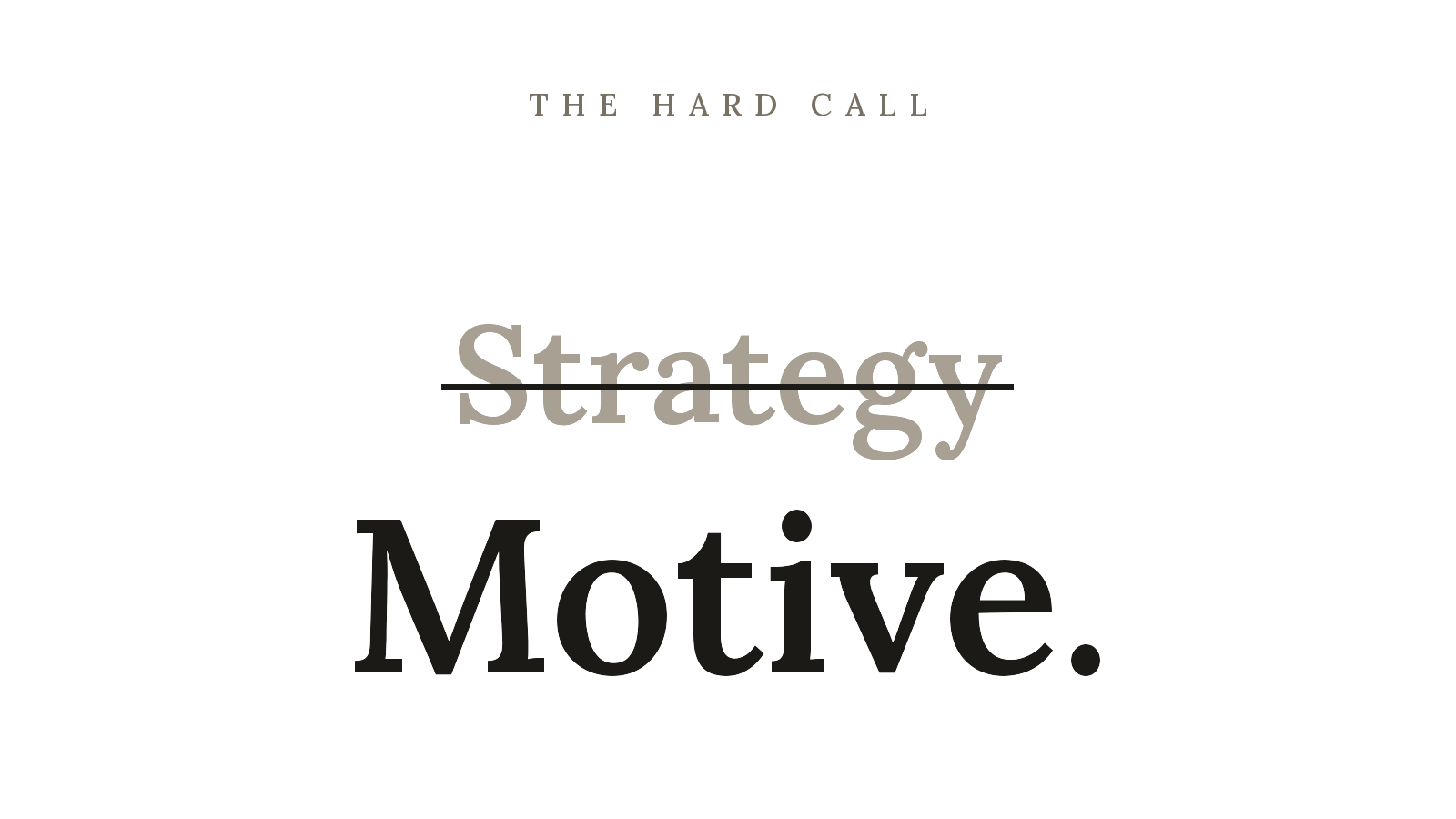
It has nothing to do with the strategy. It has everything to do with motive.

Right now, all over the place, companies are reorganising themselves around artificial intelligence. New structures, new roles, fewer of some jobs and more of others. A great many of these decisions are perfectly defensible. Some of them are genuinely smart. And a striking number of them are landing terribly.
You can watch it happen. The announcement goes out, carefully worded, full of confidence about the future. And instead of the considered nod the leadership expected, what comes back is suspicion. Quiet fury in the team channels. A sudden drop in the things that are hard to measure and impossible to fake: the extra effort people give when they actually believe in something, their candour, their willingness to give you the benefit of the doubt. People who were broadly on side a week ago are now reading every management sentence for the hidden meaning.
Here is the puzzle. In a lot of these cases the strategy is sound. The logic holds up. So why is being right doing so little to help?
Because it was never a strategy problem. It is a problem of motive.
The cover story
When a company says “we are restructuring around AI,” a large number of the people hearing it quietly translate it into something else. They hear “we have found a respectable word for cutting costs.” They hear “the share price needed a story.” They hear “the jobs were going anyway, and this sounds better than the truth.” Whether or not any of that is fair, the moment a workforce suspects that AI is a cover story, the decision is finished, however good it happens to be.
This is the part leaders consistently underestimate. They believe that if the reasoning is strong enough, it will carry the day on its own. It will not. People do not accept difficult decisions because the logic is airtight. They accept them because they trust the motive behind them. Lose that, and your logic becomes irrelevant, because nobody is listening to it any more. They are listening for what you are not saying.
Why motive holds everything up
There is a body of research here that every leader making one of these calls should know. The Yale scholar Tom Tyler spent decades studying why people accept the decisions of authorities, even ones that go against them. His answer is uncomfortable for anyone who puts their faith in being right. People accept decisions not mainly because the outcome is fair, but because the process feels fair. And of the things that make a process feel fair, the trustworthiness of your motive is the one that quietly holds up all the others.
You can give people a voice, apply consistent criteria, treat everyone with respect, and still watch the whole thing collapse if they decide your motive is not what you say it is. Equally, get the motive right, be honest about why you are really doing this, and people will accept decisions that cost them a great deal. Motive is the load-bearing wall. It is the difference between a hard decision people can live with and one they spend the next year quietly taking apart.
The vacuum you are handing them
There is a second reason AI restructurings are so prone to this, and it lives in the gap between what you announce and what people actually understand.
The organisational theorist Karl Weick spent a career making one simple point: people do not follow plans, they follow meaning. When leadership does not supply the meaning behind a decision, people do not sit quietly and wait for clarity. They build their own version, and the version they build is almost always worse than the truth, because it is made out of fear.
“AI” is perfect material for that vacuum. It is vague, it is frightening, and it already arrives loaded with every redundancy headline people have read for the last two years. So when you announce a reorganisation and wave at AI without saying plainly what you mean by it, you are not filling the vacuum. You are handing people the most alarming possible thing to fill it with themselves.
What ends a referee
I spent a long time refereeing, and the thing that ends a referee is not getting decisions wrong. You can get a surprising number of calls wrong and survive, as long as people believe you are honest. What ends you is the moment a team decides your motive is suspect. That you favour the other side. That you have an agenda.
Once that belief takes hold, something strange happens. Every correct decision you make afterwards becomes more evidence against you. Give them a fair call and they read it as you covering your tracks. You cannot referee your way out of it by being more accurate, because accuracy is not the currency any more. The only thing that rebuilds it is visible, consistent fairness over time, and an honesty about what you are doing that leaves no room for the darker reading.
Companies in the middle of an AI backlash are standing in exactly that spot. They keep reaching for a better argument, a clearer deck, a more polished account of the strategy. And it keeps not working, because the strategy was never the problem. The suspected motive is.
What actually works
The first move is candour about the real mix of reasons, including the unflattering ones. Almost no restructuring has a single clean motive. There is usually some genuine belief in the technology, some cost pressure, some bet on where the work is heading, and yes, sometimes a plain reduction in numbers. The instinct is to lead with the noble reason and bury the rest. People can smell it. The leader who says plainly, “part of this is cost, part of it is a real change in how the work gets done, and here is which is which,” is far more believable than the one with the seamless story. Being honest about the unglamorous reason is what makes the rest of it credible.
The second is a genuine voice. Not a consultation staged after the decision is already locked, which everyone can see through, but a real chance for the people affected to be heard while something can still change. Voice does not mean a vote. It means people get to say the inconvenient thing to someone who is actually listening, and watch it be taken seriously.
The third is consistency you are willing to show your working on. If roles are going, the criteria should exist before the names do, and they should be applied the same way to everyone, the popular people and the inconvenient ones alike. Criteria that appear after the outcome are never believed. Criteria set out in advance, and visibly held to, are.
The fourth is dignity, especially for the people who lose. How you treat those who are leaving is read, correctly, as the truest signal of your actual motive. Everyone still in the building is watching it closely and drawing their own conclusions about what kind of place they really work for.
The trap
There is one trap worth naming, because almost everyone falls into it. When the backlash hits, the reflex is to communicate more. More town halls, more slides, more reassurance. It almost always makes things worse. Past a certain point, more explanation reads as justifying, and justifying reads as guilt. The answer to a motive problem is not more volume. It is more honesty, delivered once, plainly, and then proven through what you actually go on to do.
The point
The AI reorganisation that lands well is not the one with the best strategic case. The case is usually fine. It is the one whose motive people believe, because the leadership was honest about the real reasons, gave people a genuine hearing, held everyone to the same standard, and treated those who lost with respect.
Being right was never going to be enough on its own. It rarely is. The companies getting this badly wrong are not, for the most part, getting the strategy wrong. They are asking people to trust a motive they have been given no reason to trust, and then acting surprised when they don’t.
You will not win this one by being more convincing. You will win it, if you win it at all, by being more honest.