

Being Right Won't Save You
The best decision in the world still loses the room if people can’t see it was fair

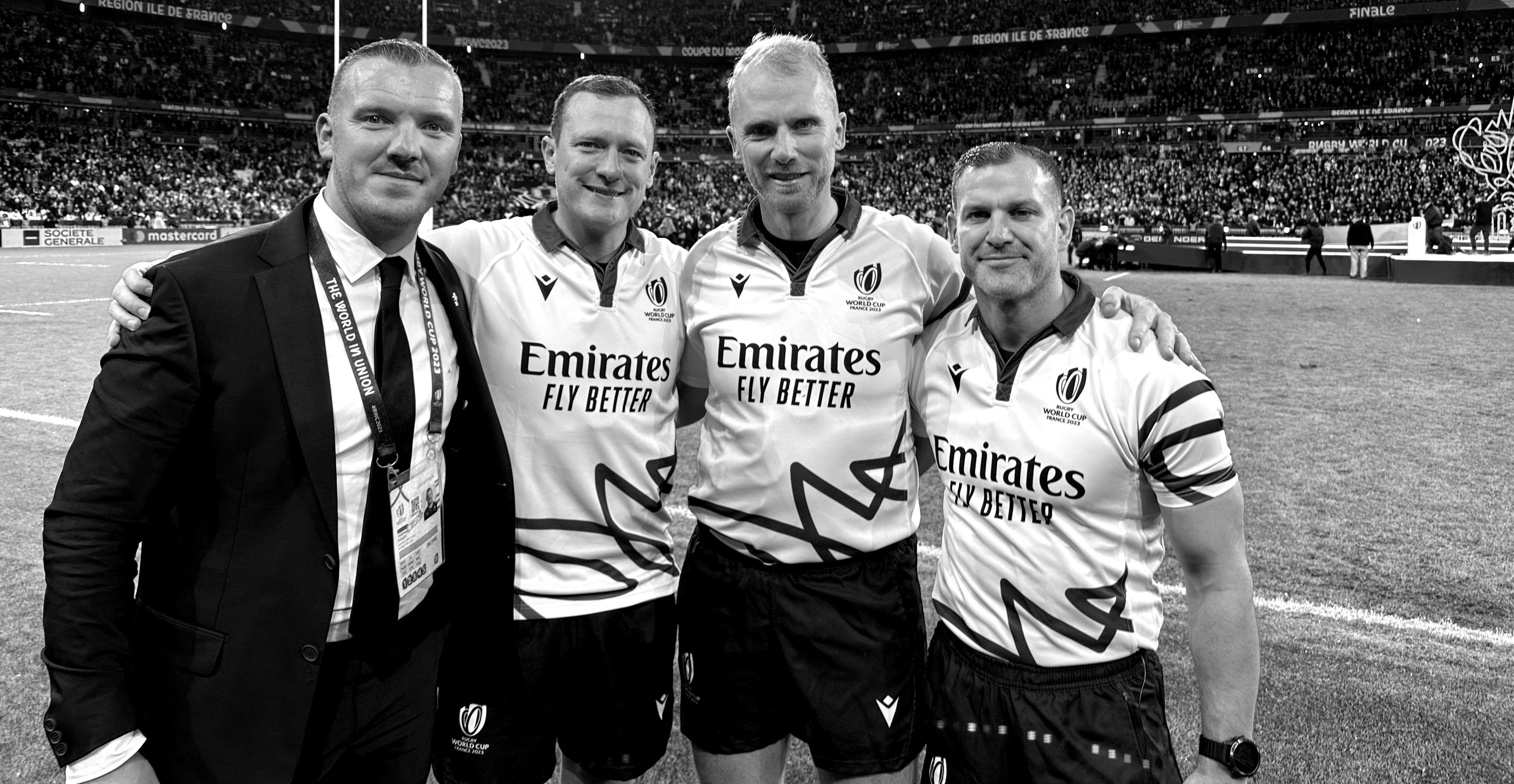
Early in the second half of the 2023 World Cup Final, New Zealand scored one of the great tries of the tournament. Aaron Smith went over after a clean break from Richie Mo’unga, the stadium came apart, and I sat in the truck watching a replay that told me, beyond any argument, that the whole move had begun with a knock-on at the lineout three phases earlier.
Everyone watching at home could see it too. The “right” answer felt obvious: the try shouldn’t stand.
Here was the problem…
The protocol that governs what a Television Match Official is allowed to do let me look back two phases to intervene. The knock-on was three phases back, one beyond the window I was permitted to touch. And even that number was contested: most of the world reported it as four phases, because there was a real argument about whether one passage was a phase at all or merely a tackle. The very unit of measurement was in dispute. When people can’t agree on how to count, they will certainly never agree on the answer.
So I had about twenty seconds, a World Cup hanging on it, and two things pointing in opposite directions. On one side, a clear error the whole planet had just watched. On the other, a rule written precisely so that officials can’t endlessly unpick a passage of play, telling me this sat outside my reach. Act on what everyone could see, and I’d be reaching past my own rules and I’d be told so, for years. Stay strictly inside the protocol, and I’d let a try stand that began with a knock-on the whole world saw and I’d be told so, for years.
I ruled the try out. And I’ll be honest with you: it is still argued about today.
I tell you that not because it makes a good story over dinner (though it does empty a room fairly efficiently) but because it is the cleanest example I know of a truth most leaders spend a career avoiding.
Being right is not the job. And on the hardest calls, “right” isn’t even on offer.
The respectable mistake
There are two ways leaders lose a contested decision. The first is obvious and I’ll deal with it quickly: they optimise for approval. If your internal compass is calibrated to being liked, hard decisions will break you, because the work creates losers and losers make noise so you start, often without noticing, to avoid the very decisions the organisation most needs you to make. That failure at least announces itself. People can smell drift, and they read it, usually correctly, as cowardice.
The second mistake is quieter and far more respectable, which is exactly why it’s more dangerous. It’s the belief that being right is enough. That a sound decision, properly analysed, will land on its own merits. That if you do the work and reach the correct answer, acceptance follows.
It doesn’t. And you can watch it not following all over the place right now. As companies reorganise around AI, executives are making waves of contested, irreversible calls. Many of them entirely defensible on the numbers and watching them land badly, corrode trust, and attract suspicion about motive. Being correct didn’t save them. Being liked was never on the table. So something else must be doing the work.
The gap people fill for you
A contested decision opens a gap between what you announce and what people understand about it. And human beings do not tolerate that gap. We are sense-making creatures. The organisational theorist Karl Weick spent a career showing that people don’t follow plans they follow meaning. When leadership fails to supply the meaning, the organisation manufactures its own, and its version, full of rumour, fear and suspected motive is always worse than yours.
So you can be entirely right and still lose the room. Which means the target can’t be correctness any more than it can be popularity. The target is something that sits between the two and beats both.
It’s legitimacy.
Why fairness beats being right
There’s a body of research every senior leader should know and most have never met. The Yale scholar Tom Tyler spent decades asking a deceptively simple question: why do people accept the decisions of courts, regulators and authorities, even when decisions that go against them? His finding, replicated across many countries, is uncomfortable for anyone who believes decisions stand or fall on their merits. People accept decisions not primarily because the outcome is fair, but because the *process* feels fair. Process beats outcome. Even when they lose, if the process is experienced as legitimate, they accept the call and act on it.
That is the whole engine. It means a leader does not need to be popular, and does not even need to be provably right, to carry a decision — provided the decision is legitimate. Tyler found four conditions that make a process feel that way, and they map onto almost every consequential call a board ever makes:
- Voice: did the people affected get a genuine chance to be heard before it was decided?
- Neutrality: was it decided on transparent, consistent grounds, not on bias or on who you had a drink with last week?
- Respect: were people treated with dignity throughout, including the ones who lost?
- Trustworthiness of motive: did you appear to act in good faith, for the system rather than yourself?
Hit all four and you can ask people to accept decisions that materially cost them, and most will. Miss one, especially neutrality or motive, and you can hand people an outcome objectively in their favour and they’ll still resist it. It’s why a redundancy round run with clear criteria, real voice, consistent application and a credible motive can be experienced as more legitimate than a botched promotion round where the criteria appeared after the fact. The unpopular decision, done legitimately, holds. The popular one, done illegitimately, rots.
Back to the truck
Now look again at that disallowed try, because this is where it stops being a rugby anecdote.
I was never going to be “right” in a way everyone would accept - the situation didn’t allow it. Both options were defensible. Both were indefensible. There was no version of events in which the whole stadium walked away nodding. The problem wouldn’t permit one.
What I could do was be legitimate. I could apply the standard that existed, consistently, and say what I was doing as I did it into a microphone, live, before the pundits and the slow-motion replays put their version on it first. People didn’t have to like the call. But they could locate it. They could see it sat inside a rule rather than a whim, and they could predict what I’d do the next time the same situation arose. That’s the difference between a decision people fight forever and one they grieve and then accept.
It’s worth pausing on the contrast with the other famous call from that match: Sam Cane’s red card, twenty-odd minutes earlier. That one *did* have a right answer. Head contact, upright in the tackle, no mitigation, threshold met; it held up under every subsequent review. And it still drew thousands of threats, because losing a final by a point with fourteen men is a story that needs a villain. So here’s the pair, side by side: one decision that was right and one that couldn’t be, and the thing that allowed *both* to stand was not their correctness. It was that each could be placed inside a consistent, explainable standard. Being right didn’t save the first one from the mob. Legitimacy is what made it hold as a decision.
What this means on Monday morning
The achievable goal in a contested call is not agreement. It’s placeability, a decision people can locate inside a standard they recognise, even when they hate where it landed. In elite sport, the highest praise I ever got wasn’t “good call.” It was a captain finding me afterwards to say, “I didn’t like that, but I get it.” That sentence is close to a knighthood. It means the standard was consistent, the call wasn’t personal or arbitrary, and they could predict me next time. In contested conditions, predictability of standards is rarer and worth more than agreement on outcomes. That, in the end, is what respect actually is: not “they agree,” but “they can predict you.”
Three things follow, if you want your next hard call to hold.
Name the problem honestly, including whether a clean right answer even exists. Promising analytical certainty you can’t deliver is the fastest way to forfeit trust when reality arrives.
Choose your standard before the outcome, and make it visible. Standards announced in advance are believed; standards revealed afterwards never are. Commit to the principle and apply it even when the result is unwelcome.
And communicate as you decide, not afterwards in a tidy memo. Whether you realise it or not, you’re already mic’d up; to your reports, to the people they talk to, to the 11pm WhatsApp groups where your decisions actually get debated. The only question is whether you use that microphone deliberately, to set the story before someone else sets it for you.
Do that, and you won’t earn applause, or unanimous agreement, or the absence of dissent, none of which were ever the job. You’ll earn the thing that lasts, and compounds, and lets you ask the organisation to do something difficult again: respect.
You don’t need everyone to agree. You need them to be able to say eight words.
I didn’t like that, but I get it.
This is a great connection between what I believe to be one of the hardest jobs in the world and the board room . Thank you for sharing.